When we find ourselves standing against the hushed palette of evening, searching the sky for one singular band of light, we’re filtering the spectrum of our lives. We’re looking through the magic prism of memory, letting our comforts, questions or woundings lead us…Because it’s not the memories themselves we seek to reclaim, but rather the opportunity to surround ourselves with the quality of light that lives there. That’s why we go back. That’s why we use the gift of memory to sift through it all, seeking answers to people, places and things we inhabited once, hoping we might find there a single quality of light that defines us.
A Quality of Light by Richard Wagamese
Maybe I did’t know it them. I’m pretty sure I didn’t. Didn’t know that there are times in a life that pass but retain a gleaming, which means they never die, and the light of them is with you still.
This is Happiness by Niall Williams

Since darkness and shadows are themes that began my Lenten journey, the two quotes about light, from novels I’d read, captured my attention. I want to sit a while with Richard and Niall’s words. There’s something I need to hear.
I’ve been doing a lot of remembering lately, trying to make sense of the shadows, those things around me that are almost hidden from plain sight, my past experience and relationships that are still part of me in indescribable ways.
In a recording made in 1996, the late Wagamese read from his 2nd novel, A Quality of Light. He describes the book that “is about two people who come together as boys and learn, through a course of a lifetime, what friendship means, what identity means, what spirituality means.” What is remarkable to me is how both authors weave heartbreak and fierce hope together in their stories.
I’m being challenged this Lenten season to go deeper into the shadows of me, of my experience, that are dimly lit. The things I don’t see very clearly do seem knotted together in that deep centre where God is. In particular, I’ve been encouraged to look beyond productivity, accomplishments, even how I see self myself. It is time to let go of what I’ve “done”— my efforts and values — that hint of my professional career, mothering (more than my children), and the mystery of 47 years of marriage. To let go of what was but still forms me.
And yet, despite my tendency to fix, manage, and overthink a situation, there are moments in the quiet when God is already there to turn me back to the glimmer of something deeper. Remembering an eight year old, whose life on the outside was far from right, yell to me from the school bus window: “This was the best day ever!” Remembering my Mom, days before her death, explain to her young grandchildren, my children, how to know she would always be present with them. And most recently, a glimmering when I simply walked my late friend’s dog in the perfection of a spring morning.
These aren’t just wistful memories requiring more context to explain my feelings or circumstances. The other persons involved were almost innocent bystanders to my encounter with what I cannot say with my own words. Something that is beyond time and the circumstances as I experienced them.
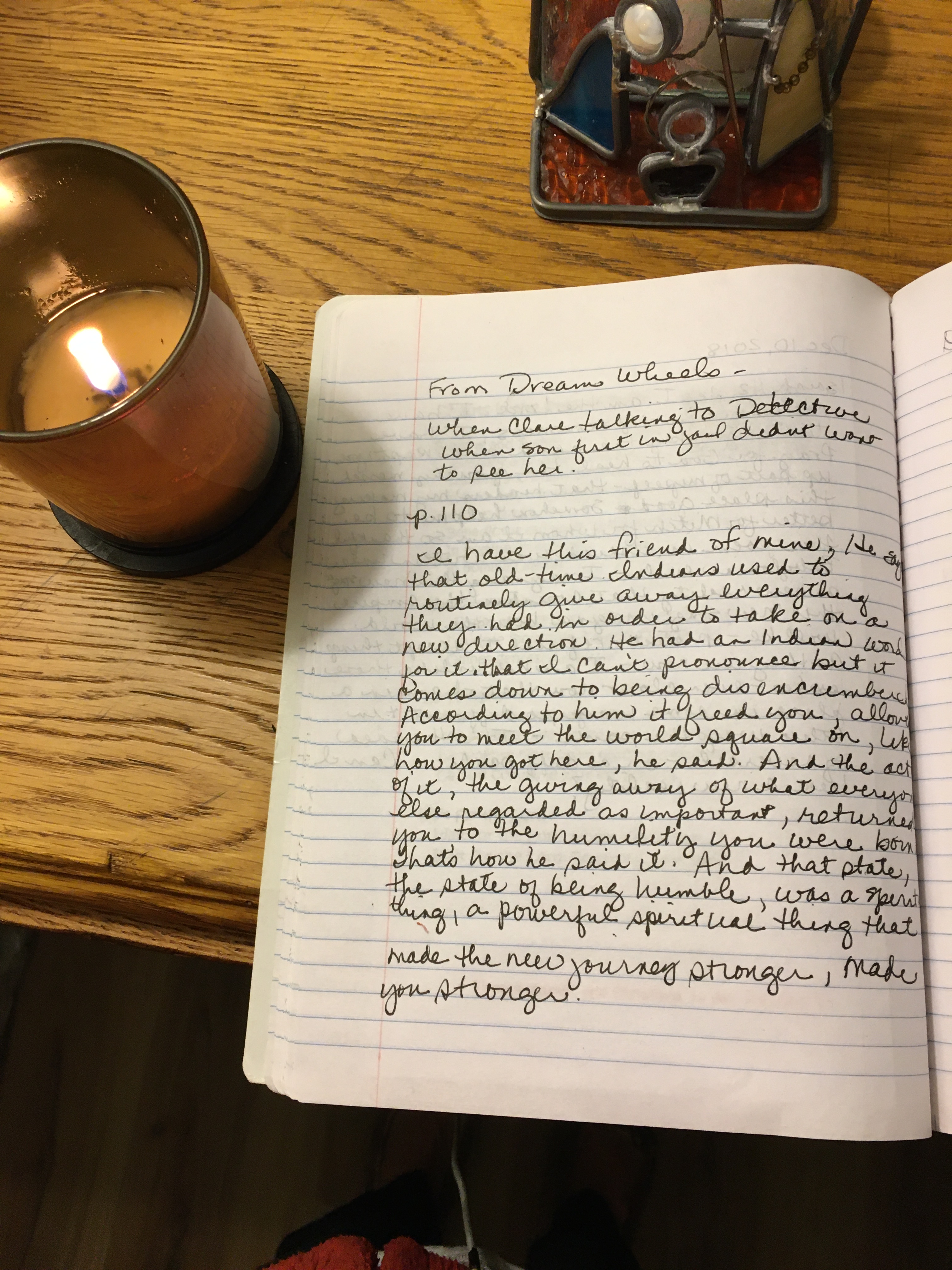
I decided those instances, that have that quality of light, that gleaming, that stays with me matters. As I’ve gotten older, I’m a little braver to push aside my fears; to look beyond the particulars of what happened and my over-thinking, re-thinking, and re-arranging that I do to make things and me appear okay. And as I was struggling to write this piece, I gave up trying to say what I didn’t know how to say and decided to simply read. In the novel where I was taking refuge, there it was again: that elusive light, a gleaming, a glimmer of divine light.
In Sue Monk Kidd’s historical fiction, The Invention of Wings, Sarah Grimké, at a crossroads in her life, is sitting alone “listening for the Voice the Quakers seemed so sure was inside of us.” When she had given up, when she let go of her expectations, when her mind stopped racing, she heard a voice. It was not like a common thought—“it was distinct, shimmering, and dense with God.”
Whether the light or gleaming defines us, wakes us to another sense of ourselves, or just releases a moment of one with God and one another; we pay attention and gain strength to trust the unfolding of our life. What Frederick Buechner calls “the occasional, obscure glimmering through of grace” is a gift that simply comes. Perhaps it is that shining, the quality of light that sets that thing, no matter how elusive or quotidian, apart. And that, is the part we carry with us and perhaps becomes us, that takes time and stillness to discover again.





 Attentive to Joy