Starting From the Dark

The subtitle of the Lenten section in Jan Richardson’s book, In Wisdom’s Path, was “Art From the Dark.” Author and artist Jan describes the process of monotype printing that she tried for the first time alongside her written reflections.  The process seemed simple: black etching ink wiped from a plate with a brush, cloth and palette knife to “find” an image. The transformative nature of going from ink plate to paper, though, was full of surprises and frustrations. In sharp contrast to the “piecing together and building up” of her primary medium of collage, monotype prints require erasure and wiping away.  She had to learn to start from the dark.
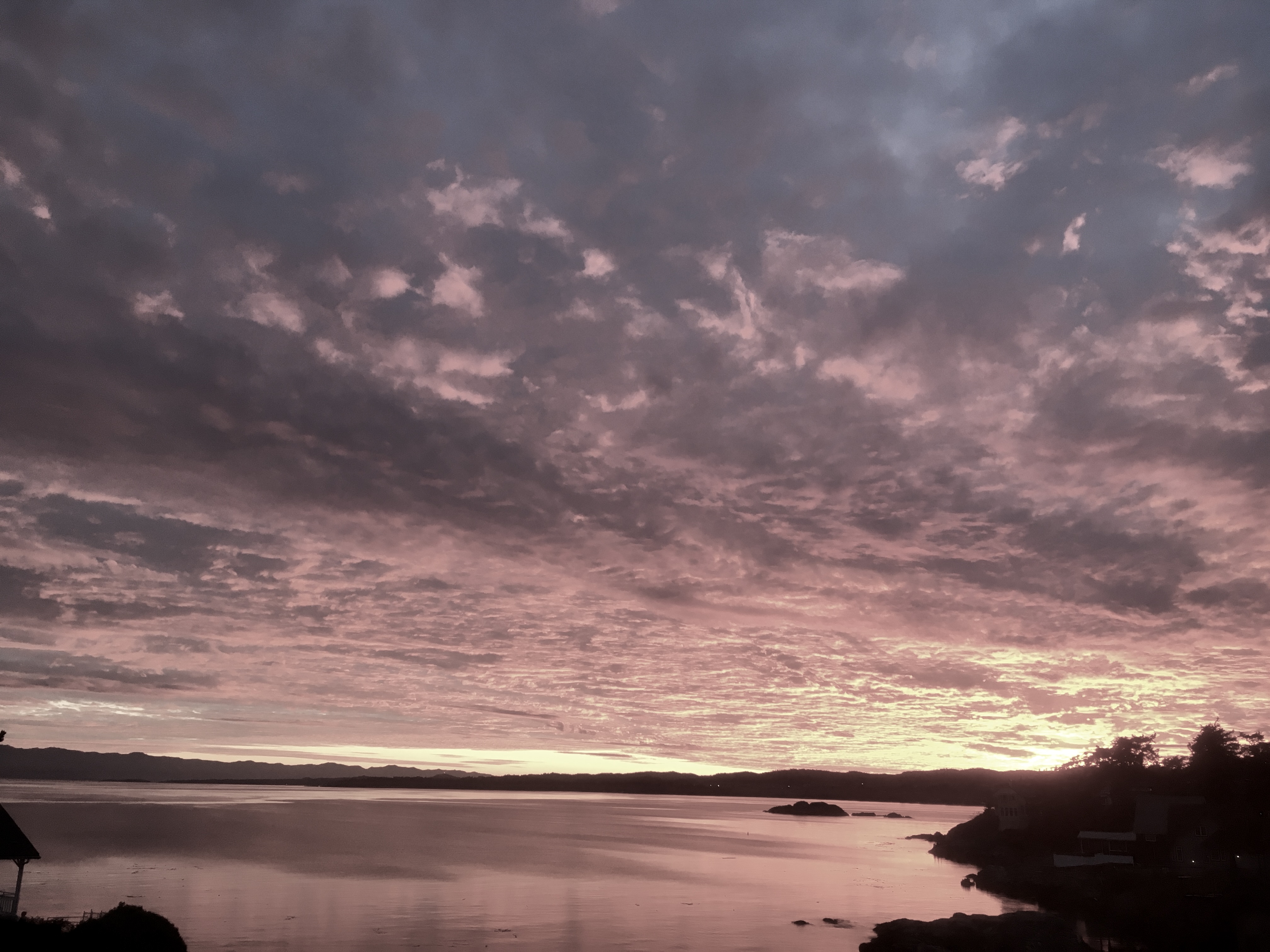
photo by Mitch Coggin


Perhaps for me too, darkness is a fitting place to begin this Lenten season.  

I began the season on Wednesday with ashes on my forehead, a most holy moment for me. The service I attended was unexpectedly a time of deep listening that emanated from silence: Lectio Divina readings of the gospel passage, bells marking extended silences, no sermon, no music, quiet imposition of ashes, reflective Eucharist. With the soot mark on my forehead, I went out reminded of my connection to the earth and creation in all it’s beauty and brokenness and the healing Spirit that connects all of us. 

In this season, we are invited to begin stripping away what distracts us from recognizing that deep down rightness that is hiding in plain sight of all the broken places.  Or, is it hurt and brokenness disguised as power that shapes our perception? 

Jan’s encourages us to take what we find in the shadows of our lives and craft what we haven’t seen before. 

I was reminded of two things: one behind me, one before me.  Years ago, at a retreat at St. Meinrad, one of the leaders, Gary, engaged me in conversation about my shadow self and as I remember, he thought it was my thinking (too much).  Obviously he knew some things about me. Later, he asked me to join him in the evening service anointing others—a numinous experience where I felt the tangible presence of the Divine and direction beyond myself. 

Beginning next week, I will join with a group of women (new to me) in a book study. I happened to notice the book’s appendix, “A Shadow-Work Handbook for Aging Consciously. ” I’m trying to quell my fears of the facing all these unknowns and be open to what comes out of those shadows.

Despite today’s murky morning, the sun has lighted the red chair where I sit.  I’m grateful for Jan Richardson’s words and images that expose and bless both the darkness and the light that will shine through this Lenten season; even the tiny pinpoints that pierce but don’t quite illuminate the darkest night.

Burning Between

February 2, the day I’m writing this, marks a Christian feast day, Candlemas, more commonly known as The Feast of the Presentation. I learned this on Sunday, when the service I attend decided to celebrate Candlemas a day early. The gospel reading was the story of Simeon and Anna at the Presentation of infant Jesus. It is a story of patient hope and resilience and suffering that cannot be ignored. 

The liturgy included the blessing of candles, symbolizing Christ as the light of the world. We came to the communion table to receive and light a blessed candle. The dimly lit space glowed with all those little flames as we sang “This Little Light of Mine” to close the service. We were encouraged to take the candles home and light them when we needed a little extra light and hope in our lives. 

And as often happens, a few days before, I’d copied this poem by William Brodrick from the Northumbria Community’s Morning Prayer.  It seemed to explain and calm me a little after waking up the night before afraid of the terror and death that both take away life.

We have to be candles,

burning between

hope and despair,

faith and doubt,

life and death,

all the opposites.

That is the disquieting place 

where people must always find us.

And if our life means anything,

if what we are goes beyond monastery walls

and 

does some good,

it is that somehow,

by being here,

at peace,

we help the world cope

with what it cannot understand.


Now is a time I need extra light and hope.  However, that hope has to exist side by side with my despair that isn’t a bad dream in the night but the daily news. That candle I brought home is a reminder of that light that mediates the disquieting place between.

Tethered in Place

Sometimes we don’t have a word or label for what we do, for what keeps us in place.

When we were moving a couple of years ago, when our loved home sold in one day and we moved to the rental, I sorted our belongings according to what we would need for a few months.  I didn’t actually know how long that would be since we didn’t know where we were going, yet. 

Then, when we knew we were coming here, across the country and into the next, we unpacked boxes and sorted our lives into what we would let go of and what we deemed worth keeping with us.  Once precious books, family furniture filled with memories, and artful diversions seemed too cumbersome to keep.  We tacitly lightened our load.

 My feet were on unsteady ground, shifting from one place and purpose to another.

I still feel tentative.  After being here for two years, pictures in protective wrap are leaning against the wall in the living room and the dining room table is cloistered in moving blankets against the basement wall.  I just rearranged the furniture, again.

I remember, I happened upon the verse from Deuteronomy in Frederick Buechner’s recollections in The Remarkable Ordinary.  All my moving pieces might be reimagined in the assurance of being held, as Buechner says, by “whatever there is that is holy to hold us.” 

There is none like God…

who rides through the heavens to your help,

…The eternal God is your dwelling place, and underneath are the everlasting arms.

Deuteronomy 33: 26-27 RSV

My true dwelling place wasn’t in that almost perfect house, or the providence of places that followed that year.  My dwelling place was able to hold me for a moment that was beyond time.  I repeated, was emboldened by, and rested in the words; the eternal God is my dwelling place, and underneath ARE the everlasting arms became my assurance that I belonged to God, not to a house, or town, or even a country.

In Isaiah, there is a verse that God will keep her in perfect peace, whose mind is stayed on God.  A note in the bible I read says that Isaiah 26:3 is a Hebrew metaphor that calls up an image of a tent rope “stayed” or tied to a peg in the ground that secured the tent in the windy desert.

I am far from the desert, however, I know how that image, of being blown about and securely held, was engendered by my practice of repeating that scripture phrase from Deuteronomy.  Over and over, that image of God’s everlasting arms under my home anchored my mind and tethered my heart in peace.

That’s what we do in Lectio-Divina, extracting a word or phrase from sacred reading and living with that phrase for a time.  This time, for me, the verse has stayed for this long season of feeling uprooted yet somehow grounded. The truth “in my heart” keeps me tied to the One who is the place that settles me.